
Undermount Kitchen Sink: A Complete Guide to Everyday Use, Materials, Installation, and Long-Term Performance
A kitchen sink is one of the most frequently used elements in any kitchen. It is part of daily routines—washing produce, cleaning cookware, preparing meals, and managing constant water exposure. Because of this, the type of sink used has a direct impact on cleanliness, comfort, and long-term usability.
Among the different sink options available today, the undermount kitchen sink has become a preferred choice in modern kitchens due to its clean appearance, practical design, and compatibility with solid countertop surfaces.
This article focuses entirely on the undermount kitchen sink as a product, explaining how it works in everyday kitchens, what materials are commonly used, how installation is handled, what to expect over time, and how it fits into a complete kitchen setup.
What Is an Undermount Kitchen Sink?
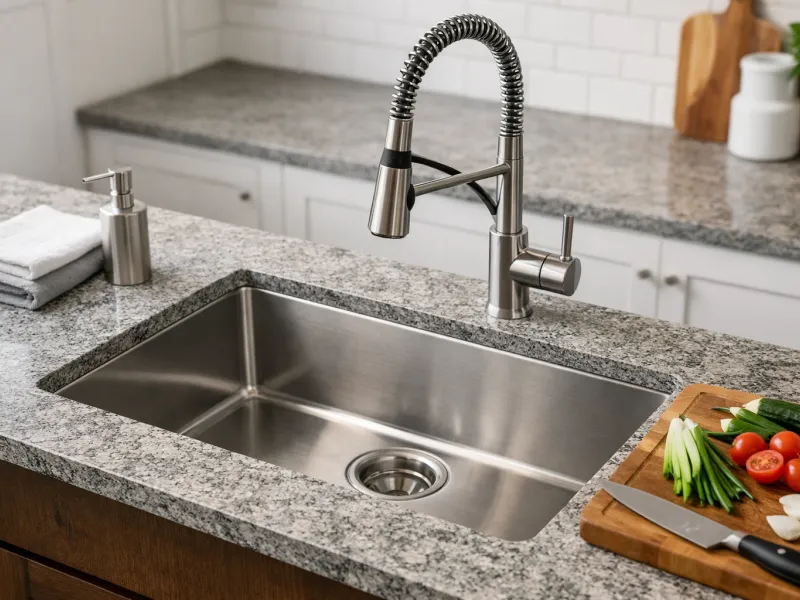
An undermount kitchen sink is installed underneath the countertop rather than resting on top of it. This design leaves the countertop edge fully exposed and uninterrupted.
In everyday use, this creates a smoother workflow in the kitchen. Crumbs, water, and food residue can be wiped directly from the countertop into the sink without being blocked by a raised rim. Over time, this small detail makes cleaning easier and keeps surfaces looking cleaner.
Undermount sinks are most commonly paired with solid surfaces such as quartz, marble, granite, and porcelain, which are typically found in the Tile and Stone category.
Why Undermount Sinks Are Chosen for Modern Kitchens
People often choose undermount sinks not because of trends, but because of how they perform in daily life.
Common reasons include:
- Easier countertop cleaning
- Fewer areas where dirt and moisture collect
- A seamless visual transition between sink and countertop
- Better long-term surface hygiene
Because of these advantages, undermount sinks are a standard option within most modern Kitchen product collections.
Undermount Sinks Compared to Other Sink Types
Undermount Sink
- Installed below the countertop
- Best suited for solid surface countertops
- Clean and minimal appearance
- Requires precise installation
Drop-In (Top-Mount) Sink
- Rests on top of the countertop
- Compatible with laminate surfaces
- Easier to install
- Raised rim collects debris over time
Farmhouse (Apron-Front) Sink
- Exposed front panel
- Deep basin
- Requires cabinet modification
- Heavier than standard sinks
In kitchens where ease of cleaning and surface continuity are priorities, undermount sinks are often the most practical option.
Materials Used in Undermount Kitchen Sinks
Stainless Steel
Stainless steel is one of the most common materials used for undermount sinks.
In daily use, it offers:
- Resistance to heat and moisture
- Easy cleaning
- Compatibility with most kitchen styles
Thicker stainless steel sinks tend to feel sturdier and reduce noise during use.
Granite Composite
Granite composite sinks are made from stone particles combined with resin.
They are often chosen because:
- They hide water spots well
- They absorb sound better than metal
- They resist scratches from daily use
Because of their weight, they require proper cabinet support.
Fireclay
Fireclay sinks have a smooth, glossy surface and a solid feel.
They are valued for:
- Strong resistance to staining
- Durable surface finish
- Long lifespan
Due to their weight, installation support is especially important.
Sink Sizes and Cabinet Compatibility
Choosing the right sink size is about more than appearance. The cabinet underneath must support both the size and weight of the sink.
Common sink widths include:
- 27 inches for compact kitchens
- 30–33 inches for standard kitchens
- 36 inches for larger layouts or double-bowl designs
Adequate space must also be left for plumbing connections and optional accessories such as garbage disposal units, which are often part of the broader Kitchen product category.
Countertop Compatibility
Undermount sinks require solid, water-resistant countertops. Suitable materials include:
- Quartz
- Granite
- Marble
- Porcelain slabs
These surfaces allow the exposed countertop edge to be finished and sealed properly. Laminate countertops are not recommended, as moisture can penetrate the exposed edge over time.
Compatible surface options can be explored in the Tile and Stone section.
How Undermount Sink Installation Works
This section explains the general installation process without referring to any services.
- The countertop is measured and cut according to the sink template
- The exposed edge of the countertop is polished or finished
- The sink is positioned beneath the opening
- Support brackets, rails, or a cradle system are installed
- A waterproof sealant is applied between the sink and countertop
- The sink is leveled and left to cure before use
Proper support and sealing are essential for long-term performance.
Common Issues and What Causes Them
Most problems related to undermount sinks are not caused by the sink itself.
Common causes include:
- Inadequate sealing
- Uneven leveling
- Insufficient cabinet support
When addressed correctly during installation, these issues are unlikely to appear later.
Cleaning and Everyday Maintenance
Routine care does not require special products.
Recommended approach:
- Mild dish soap
- Soft sponge or cloth
- Rinse and dry after use
Avoid abrasive cleaners and harsh chemicals, especially on composite or fireclay surfaces.
Long-Term Use and Durability
With proper installation and basic care:
- Stainless steel sinks often last decades
- Granite composite sinks maintain their appearance for many years
- Fireclay sinks remain durable with minimal surface wear
Periodic checks of sealant and support hardware help maintain performance over time.
How Undermount Sinks Fit into a Complete Kitchen Setup
Undermount sinks are commonly paired with:
- Pull-down or single-handle faucets
- Stone countertops
- Deep base cabinets
These combinations are widely reflected in curated kitchen product selections available through Caspi Living, where sink options are designed to integrate smoothly with other kitchen components.
To explore compatible sinks, accessories, and fixtures, visit the main Kitchen products category.
Final Thoughts
An undermount kitchen sink is chosen for how it works in everyday life. When matched with the right countertop, supported correctly, and maintained with basic care, it becomes a reliable and long-lasting part of the kitchen.
Rather than focusing on trends or appearance alone, this type of sink continues to be valued for its practicality, cleanliness, and seamless integration into modern kitchen spaces.
Need Help Choosing the Right Kitchen Sink?
Choosing the right kitchen sink depends on several factors, including countertop material, cabinet size, daily usage, and long-term maintenance expectations. If you would like guidance on selecting a sink that fits your space and lifestyle, professional input can help clarify your options.
For product-related questions or general guidance, you can explore the contact section at Caspi Living and request a free consultation to better understand which kitchen products may be suitable for your needs.
➤ Visit our Contact page to request a free consultation.